
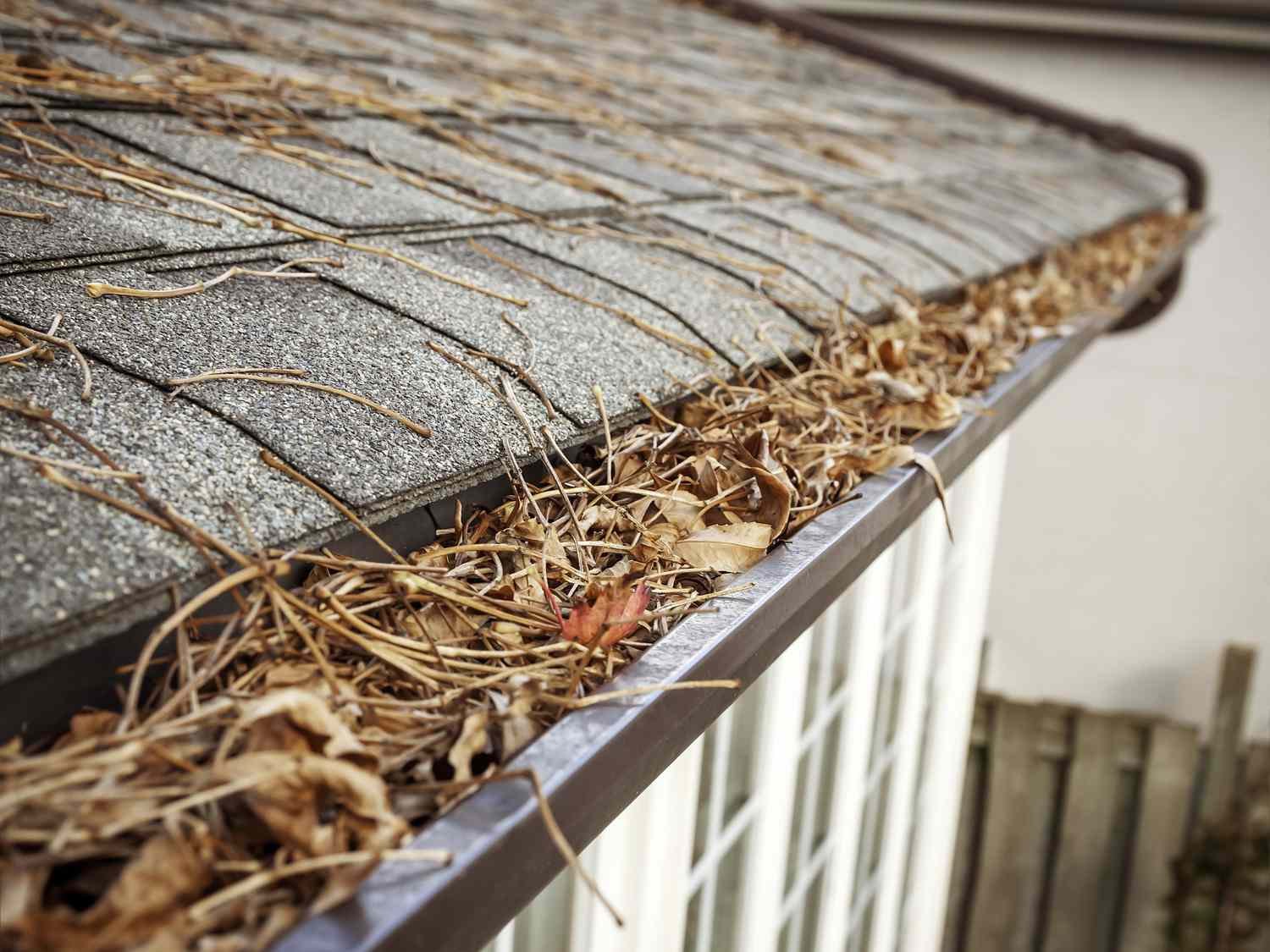
How often should you clean your gutters? For most homes, twice a year (once in spring and once in late fall) is a good starting point. But that’s a baseline, not a rule. We’ve cleaned gutters on two houses across the street from each other in Kingsport where one needed attention every eight weeks and the other went nearly a year without a problem. The difference came down to trees.
There’s no single schedule that works for every home. How much tree cover you have, how storms move through your area, the pitch of your roof, and whether you’ve already got gutter guards installed all change how quickly a system fills up.
The Baseline: Twice a Year
Spring and late fall cover most of what a typical East Tennessee or Southwest Virginia home needs.
A spring cleaning clears out what winter left behind: seed pods, pollen clumps, and whatever blew in during storm season. Late fall matters even more, because it removes leaves after most nearby trees have finished dropping. Skip that fall cleaning and you’re heading into winter with gutters already half full, which is when ice and added weight start causing real problems.
That said, “twice a year” assumes an average property. Here’s roughly how that shifts:
| Home Condition | Suggested Schedule |
|---|---|
| Average home, moderate tree cover | Twice a year |
| Few nearby trees | Once or twice a year |
| Heavy tree coverage | 3-4 times a year |
| Pine trees close to the house | Check every few months |
| Gutter guards installed | Inspect once or twice a year |
| After a severe storm | Inspect as needed |
For a broader seasonal routine beyond just cleaning, our gutter maintenance guide for East Tennessee homes covers what else to check throughout the year.
What Actually Changes the Schedule
Trees and Pine Needles
This is the biggest variable, by far. Leaves get the blame, but gutters also collect seed pods, small branches, roofing grit, and, the one that catches people off guard, pine needles.
Pine needles don’t just sit on top of debris the way leaves do. They wedge into downspout openings and gutter seams, and a gutter can look mostly clear while the needles have already choked the drainage path. If your property has pines close to the roofline, checking every couple of months is worth the ten minutes it takes.
Checking isn’t the same as cleaning, though. If you look and the gutters are still moving water fine, there’s nothing to do yet.
Storms
A set schedule works until a storm rearranges things. Wind carries debris onto the roof that wouldn’t normally end up there, and heavy rain has a way of exposing a problem that stayed hidden through weeks of dry weather.
After anything severe blows through, it’s worth watching how water actually moves during the next rain. It should run through the gutter and out the downspout without spilling over the front edge or pooling in one spot. If it’s doing either of those and the gutters are clear, that’s usually not a cleaning problem, it’s a repair issue, often pitch or a loose section.
Gutter Guards
Guards cut down on the big stuff (whole leaves, twigs, larger debris) but they don’t stop maintenance altogether. Fine grit, seed material, and small debris still settle on top of guards or gather right at the downspout opening.
Homes with guards installed can usually get away with one or two inspections a year instead of a full cleaning schedule, but “installed guards” and “no maintenance needed” aren’t the same thing. If you’re weighing whether guards make sense for your home, we break down the actual trade-offs in are gutter guards worth it.
Timing the Fall Cleanout Right
Knowing that fall cleaning matters is one thing. Getting the timing right within that window is what actually saves you a second trip up the ladder.
Clean too early and you’ll likely need to do it again, since trees in this region don’t all drop at once. Oaks in particular tend to hold onto leaves well after maples and other varieties have already let go. We generally tell homeowners to wait until most of the leaf fall has finished, usually by mid-to-late November locally, rather than cleaning the first week the leaves start turning.
If you’re not sure whether your trees are done dropping, a five-minute look from the ground tells you more than a calendar date. Bare branches overhead are the real signal, not the first frost.
For the full seasonal breakdown of what to check each time of year, our gutter maintenance guide for East Tennessee homes walks through spring, summer, fall, and winter tasks in more detail.
Signs You Shouldn’t Wait for the Next Scheduled Cleaning
Some signs mean it’s time to check things now, regardless of what the calendar says:
- Water spilling over the gutter edge during rain
- Downspouts draining slowly or not at all
- Visible plant growth inside the gutter
- Gutters sagging or pulling from the fascia
- Water stains on the siding below the gutter line
Overflow is usually the clearest sign something’s wrong, and it’s not just cosmetic. Water that spills instead of draining ends up against fascia boards, siding, and, over time, pooling near the foundation. Wet debris left sitting in a gutter also gets heavier, and that extra weight is what eventually pulls hangers loose.
Is Once a Year Ever Enough?
For a home with minimal tree cover and a drainage system that’s been performing well, once a year can be enough. We see this most with newer builds in more open lots around the region.
But once-a-year cleaning shouldn’t mean once-a-year attention. A quick look after a heavy storm or a particularly bad leaf season costs nothing and catches problems before they become expensive ones. Inspecting and cleaning aren’t the same task; you can check a system several times a year without doing a full cleaning each time.
DIY or Call a Professional?
Plenty of homeowners handle their own gutter cleaning, and for a single-story home with easy roof access, that’s often reasonable.
It makes more sense to call in help when:
- The home is two stories or more
- The roof is steep or hard to access safely
- Downspouts are badly clogged or you’re not sure why water isn’t draining
- Gutters are already sagging or pulling loose
- You’ve cleared visible debris and water is still overflowing
That last one matters: if the gutters are clean but still not draining right, more cleaning won’t fix it. At that point it’s a pitch, sizing, or downspout issue, not a debris issue.
If cost is part of the decision, our breakdown of gutter cleaning costs covers what typically affects pricing in this area. And if you’d rather have it handled professionally, Drip Drop Gutter’s gutter cleaning services cover inspection and cleaning together, so any drainage issue gets caught while we’re already up there.
Most homes do fine on a spring-and-fall schedule. Yours might need more, or less; it really does come down to what’s around your property and how the system’s been performing. If your gutters haven’t been checked in a while, or you’re already seeing overflow, you can request a free estimate and we’ll tell you honestly what your home actually needs.
Frequently Asked Questions
Most homes do well with two cleanings a year, in spring and late fall. Homes with heavy tree cover or pine trees nearby may need three or four cleanings or inspections annually.
For homes with minimal nearby trees and a well-draining system, yes. Even then, it's worth checking the gutters during the year, especially after major storms.
Homes surrounded by mature trees often need checking every few months, with full cleanings three to four times a year depending on how fast debris builds up.
No. Guards cut down on how often you need a full cleaning, but fine debris still settles on top of them or near the downspout. Inspect guarded gutters once or twice a year even if you rarely see buildup.
Overflowing water, slow-draining downspouts, visible debris, plant growth in the gutter, sagging sections, and water stains below the gutter line are the clearest signs.
Not automatically after every storm, but it's worth checking if branches or heavy debris reached the roof, or if you notice overflow, slow drainage, or a blocked downspout afterward.