
Intro:
Are gutter guards worth it? It’s one of the most common questions homeowners ask us, and the honest answer is: for the right home, yes. Gutter guards aren’t magic, but if your property has a lot of trees, a multi-story roofline, or a history of clogged gutters and ice dams, quality gutter guards usually pay for themselves in less cleaning and less water damage. If you have few trees and already clean your gutters easily, they may be optional. At Drip Drop Gutter, we’ve installed and maintained gutters across East Tennessee and Southwest Virginia for over 39 years, so this guide gives you a genuinely honest look at whether gutter guards are worth it, based on what we’ve actually seen on Tri-Cities homes: the pros, the cons, the types, and the cost.
What Are Gutter Guards?
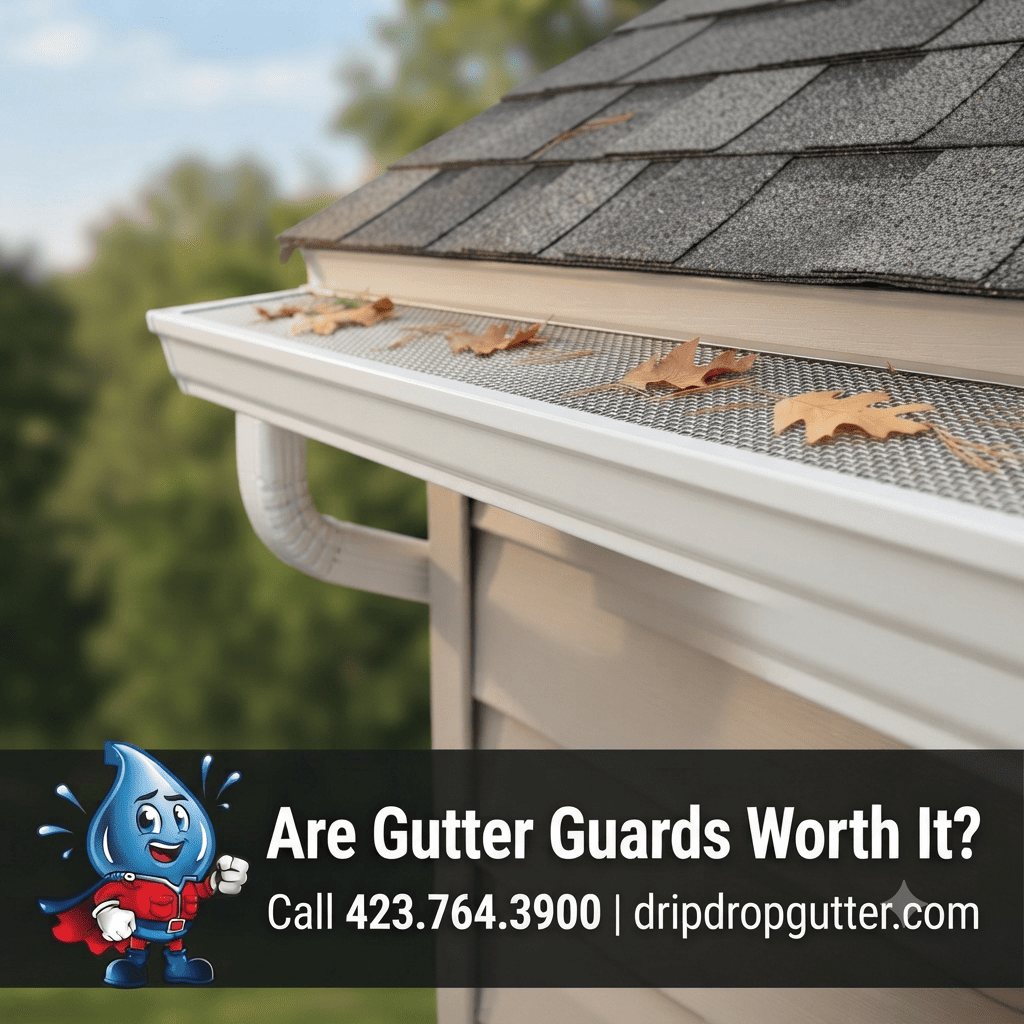
Gutter guards are covers or screens that sit over your gutters to keep leaves, seed pods, pine needles, and other debris out, while still letting rainwater flow through. The goal is simple: fewer clogs, fewer overflows, and a lot less time spent on a ladder scooping out gunk. There are several types, and the right one depends on your roof and the kind of debris around your home.
The Pros of Gutter Guards
1. Less frequent gutter cleaning: This is the big one. By blocking leaves and debris, good gutter guards cut down how often you need a full gutter cleaning. Most homes without guards need cleaning at least twice a year, and more often under heavy tree cover. Guards can stretch that out significantly, which matters a lot in our region where fall leaf drop and year-round pine needles are relentless.
2. Prevent clogs, overflow, and water damage: When gutters clog, water spills over the edge and works its way toward your foundation, fascia, and siding. Over time, that leads to cracked foundations, rotted trim, and damp basements. East Tennessee and Southwest Virginia get over 40 inches of rain a year, so a clogged gutter can turn into real, expensive water damage fast. Guards keep water flowing where it should.
3. Discourage pests and nesting: A clogged, debris-filled gutter is a welcome mat for birds, squirrels, wasps, and insects looking to nest. A proper guard system removes that easy habitat, so pests are far less likely to move in above your head. It’s one of the quieter benefits, but Drip Drop Gutter customers with tree-heavy yards notice it quickly.
4. Help your gutters last longer: Standing water and trapped debris add weight and hold moisture, which strains your gutters and speeds up rust and sagging. By keeping the system cleaner and lighter, guards can extend the life of your gutters and reduce the need for gutter repair down the road.
The Cons of Gutter Guards (What Some Installers Won’t Tell You)
At Drip Drop Gutter, we believe honest advice earns more trust than a hard sell, so here’s the other side. Guards are helpful, but they’re not a miracle product, and going in with the right expectations matters.
1. They’re not fully maintenance-free
No guard makes your gutters completely hands-off. Fine debris and pollen can still collect on top over time, and the corners and downspouts need an occasional check. Any company that promises you’ll never touch your gutters again is overselling.
2. Fine debris can still get through
Pine needles, shingle grit, and small seeds are the tricky ones. Some guard types, especially wider screens, can let them slip through. That’s exactly why guard type matters so much in our area, where pine needles are everywhere.
3. Cheap or poorly fitted guards can cause overflow
In heavy rain, some solid or reverse-curve guards can let water overshoot the gutter if they’re not sized and installed correctly. Proper installation by someone who knows local rainfall makes the difference between a guard that works and one that causes new problems.
4. Upfront cost
Guards are an added investment on top of your gutters. For the right home the long-term savings are worth it, but it’s still money up front, so it’s worth choosing the right type rather than the cheapest one.
Types of Gutter Guards (and Which Is Best)
Not all guards are created equal. Here are the main types we work with:
- Micro-mesh guards: a fine stainless steel mesh that blocks even small debris like pine needles and shingle grit while letting heavy rain through. For most homes in our area, especially those with pine trees, this is the most effective option.
- Screen guards: a larger mesh or screen that keeps out leaves and twigs. A cost-effective choice for homes with mostly larger debris.
- Reverse-curve (surface tension) guards: a solid cover that guides water into the gutter while debris slides off the edge. Effective, but needs correct installation to avoid overshoot in heavy rain.
- Foam and brush inserts: low-cost inserts that sit inside the gutter. Easy to fit, but they clog over time and generally need the most upkeep.
If you want to go deeper on the options and which fits your roof, our gutter guards page breaks down each type in detail.
How Much Do Gutter Guards Cost?
Cost depends on the type of guard, the length of your gutters, the number of stories, and your roofline. As a rough guide: basic screen and DIY options are the cheapest, while professionally installed micro-mesh systems cost more but perform best and last longest. Foam and brush inserts are inexpensive up front but tend to cost more over time because they need replacing. This is a big part of whether gutter guards are worth it for your budget, so the honest answer is that every home is different. That’s why Drip Drop Gutter gives clear, upfront pricing after a quick on-site look, with no surprises.
Are Gutter Guards Worth It for Your Home? The Verdict
Here’s the straight answer. Gutter guards are usually worth it if:
- Your property has lots of trees, especially pines, oaks, or maples that drop heavy debris.
- You have a two-story or steep roof that makes cleaning dangerous or expensive.
- You’ve had clogged gutters, overflow, or ice dams before.
- You simply want to spend less time on a ladder and better protect your home from water damage.
They may be less essential if you have few trees, a single-story home, and you already clean your gutters easily and safely. For many homeowners across the Tri-Cities, though, gutter guards are worth it because the reduced maintenance and the protection against water damage add up over the years, as long as you choose the right type and have them installed correctly. If you’re still not sure whether gutter guards are worth it for your specific home, that’s exactly what a free on-site assessment from Drip Drop Gutter is for.
Why Local Experience Matters
Gutter guards work best when they’re matched to your specific home and to the debris and weather of our region. Pine needles, heavy fall leaf drop, 40+ inches of annual rain, and winter freeze-thaw all shape which guard will actually keep your gutters clear. At Drip Drop Gutter, we’ve protected homes across East Tennessee and Southwest Virginia for over 39 years, including Johnson City, Kingsport, Bristol, and Bluff City, so we can recommend the guard that fits your roof, your trees, and our climate. We can also pair guards with new seamless gutters or a fresh gutter installation so your whole system works together.
Gutter Guard FAQs
For most homes with nearby trees, yes. Quality gutter guards greatly reduce clogs and cleaning, and they help prevent the water damage that comes from overflowing gutters. Homes with few trees may find them optional. The key is choosing the right type and having them installed correctly.
No. Good guards dramatically reduce cleaning, but no guard is completely maintenance-free. Fine debris and pollen can still collect on top, and the corners and downspouts need an occasional check. You’ll go far longer between cleanings, and most upkeep becomes a quick look rather than a full clean-out.
For most homes in East Tennessee and Southwest Virginia, micro-mesh guards are the most effective, because their fine stainless steel mesh blocks small debris like pine needles while still letting heavy rain through. The best choice depends on your roof and the debris around your home.
Yes, but the type matters. Pine needles are small, so micro-mesh guards work best for homes with pine trees, since larger screens can let needles through. This is a common issue in our region, which is why we match the guard to your specific debris.
Poorly chosen or poorly installed guards can contribute to ice buildup in freeze-thaw weather, but the right guard, correctly installed, actually helps keep gutters clear so water can drain before it freezes. Proper installation and local know-how make the difference.