
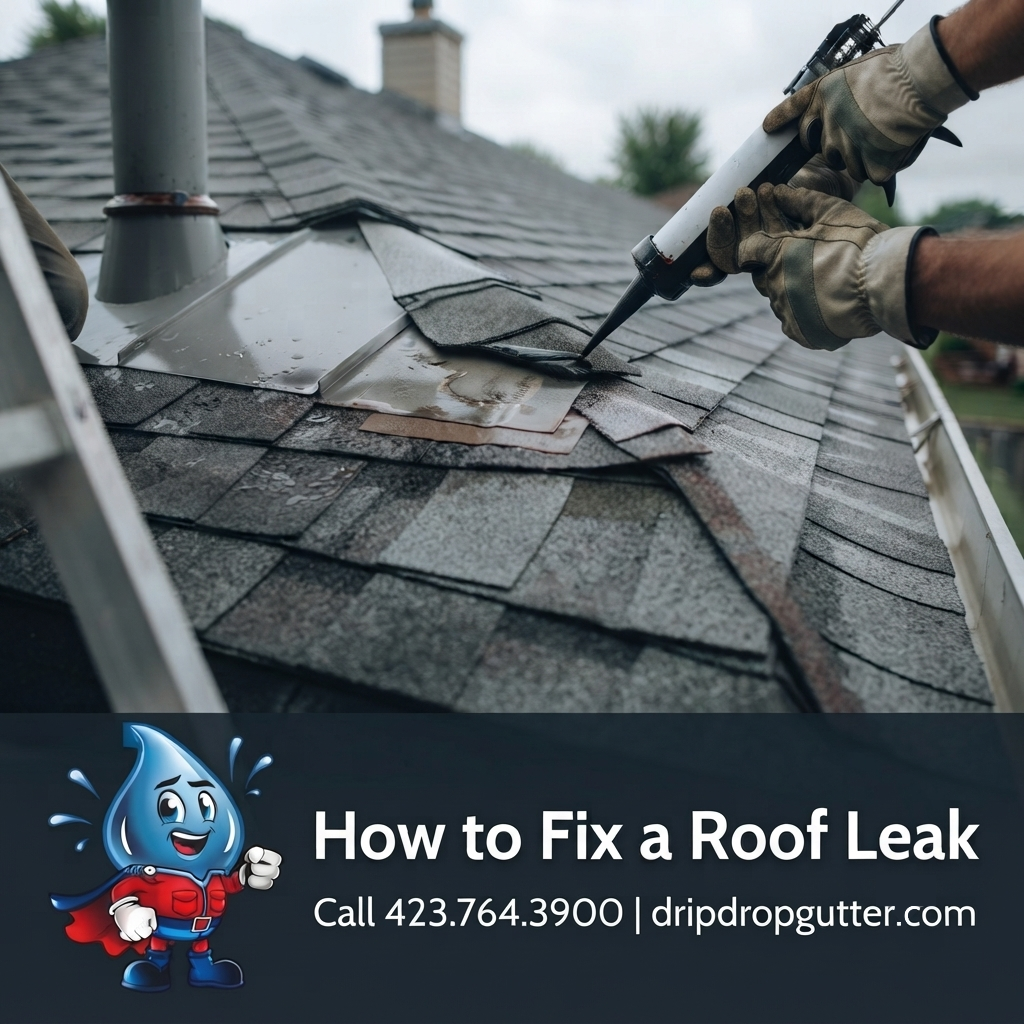
A roof leak never shows up at a good time. The good news is that you can often slow or stop the damage yourself while you arrange a permanent repair. In short, to fix a roof leak you need to find where the water is getting in, contain the water inside, and apply a temporary fix like a tarp or sealant until a professional can properly repair it. This guide from Drip Drop Gutter walks you through each step, based on 39+ years of roofing and gutter work across East Tennessee and Southwest Virginia. And if the leak is serious or the weather is dangerous, skip ahead and call for emergency roof repair right away.
First: Contain the Water and Stay Safe
Before you try to fix anything, protect your home and yourself. If water is dripping through the ceiling, put a bucket underneath and lay towels to catch splashes. If the ceiling is bulging with trapped water, place a bucket below and carefully poke a small hole at the lowest point of the bulge with a screwdriver to let the water drain in a controlled way, because a full, sagging ceiling can collapse on its own. If water is anywhere near light fixtures, outlets, or wiring, turn off the power to that part of the house. Never climb onto a wet or storm-damaged roof; most leaks can be traced and managed from inside first.
How to Find a Roof Leak
Finding the leak is usually the hardest part, because water rarely enters directly above where it drips. It often travels along the underside of the roof deck or a rafter before dropping down. Over 39+ years, the Drip Drop Gutter team has traced thousands of leaks, and this is the same approach we use:
- Start inside, in the attic. With a flashlight, look for water stains, dark spots, mold, or actual dripping on the underside of the roof. Water marks and trails point you back toward the entry point, which is usually higher up the roof than the drip.
- Follow the water uphill. Trace any wet trail up the rafters or decking to the highest point of moisture. That is typically where the water is getting in.
- Check the usual suspects. Most leaks start at roof penetrations and transitions, not the shingles themselves: around chimneys, vents, skylights, and where the roof meets a wall, and at the flashing in valleys. Damaged, curled, or missing shingles are the next thing to check.
- Use a hose test if needed. If you can’t find it and conditions are safe, a helper can gently run a garden hose over sections of the roof while you watch inside for the drip to appear. Go slowly, one area at a time, starting low and working up. This hose test is one of the most reliable ways to pinpoint a hidden leak.
How to Stop a Roof Leak (Temporary Fixes)
Once you know roughly where the water is coming in, these temporary fixes can stop or slow the leak until a proper repair is done.
Tarp the roof
A heavy-duty tarp is the most reliable emergency fix for a larger leak or storm damage. Only do this if the roof is dry and safe to be on. Spread the tarp so it covers the damaged area and extends well past it, ideally up and over the ridge so water can’t run underneath. Anchor the edges securely with boards so wind can’t lift it. Tarping buys you time and keeps water out until a professional can repair the roof.
Seal small leaks
For a small, pinpointed leak, roofing sealant or roofing cement can work as a short-term patch on cracked flashing or a small gap, and roofing tape can cover a minor split. These are temporary, not permanent, but they can hold back water during a storm. From inside, you can also apply sealant to a clearly visible crack in the roof deck as a stopgap.
Replace or cover a missing shingle
If a single shingle is missing or badly lifted, covering that spot with a tarp or a temporary shingle patch can stop water while you schedule a repair. This is a common cause of leaks after high winds in our area.
Honesty note in the content: these are temporary fixes. Make it clear that a proper repair is still needed, which is both true and naturally leads to your service. Don’t oversell DIY.
How to Fix Common Roof Leak Problem Areas
Most roof leaks trace back to a few specific spots. Once you’ve found the source, here’s how each common problem area is typically addressed. Remember these are guidance for small, safe fixes; anything larger or on a steep or wet roof should be left to a professional.
Popped or rusted nails
Nails can back out of the roof over time and create a small hole, or rust and let water seep through. The fix is to drive the nail back down flush, or pull it out entirely, and then cover the hole and the surrounding area thickly with roofing sealant or roofing cement so water can’t get through.
Damaged or missing shingles
Cracked, curled, or missing shingles are a frequent cause of leaks, especially after high winds. To address a damaged shingle, the edges of the surrounding shingles are carefully lifted, roofing cement is applied underneath, and a piece of metal flashing or a new replacement shingle is slid in and nailed securely in place. A missing shingle should be replaced promptly before water reaches the decking.
Worn or cracked flashing
Flashing is the metal that seals joints around chimneys, vents, skylights, and valleys, and it’s where many leaks begin. Worn flashing is usually fixed by re-caulking small gaps around the metal step flashing, or applying a generous layer of roofing cement over rusted or loose joints. Badly corroded flashing needs to be replaced, which is a job for a professional.
When to Call a Professional
Some roof leaks are safe to manage yourself, but many are not. Call a professional right away if the leak is large, if there’s an active storm, if the roof is steep or you’d have to climb onto a wet surface, if water is spreading fast through the ceiling, or if you simply can’t find the source. In those cases, trying to fix it yourself isn’t worth the risk. At Drip Drop Gutter, we provide fast emergency roof repair across East Tennessee and Southwest Virginia, including tarping to stop the leak now and a lasting repair once the weather passes. For an older or worn roof that keeps leaking, a full roof repair or replacement is often the smarter long-term fix.
Call Now Emergency Roof Repair
Does Insurance Cover a Roof Leak?
If your roof leak is caused by sudden, accidental damage such as a storm, wind, or a fallen limb, it’s often covered by homeowners insurance, though it depends on your policy. Leaks caused by age or lack of maintenance usually aren’t covered. Either way, document everything: take clear photos and videos of the damage and the water inside before you clean up or make repairs. When we handle storm-related leaks, Drip Drop Gutter helps document the damage and can work with your adjuster to make the claim process smoother.
How to Prevent Roof Leaks
The best way to deal with a roof leak is to avoid one. A little upkeep goes a long way: keep your gutters clean so water drains away instead of backing up under your roofline, have your roof and flashing checked once or twice a year and after big storms, fix small issues like a loose shingle before they spread, and trim branches that hang over the roof. In our climate, with heavy rain and winter freeze-thaw, these simple steps prevent most of the leaks we see. If it’s been a while since your roof or gutters were checked, Drip Drop Gutter is happy to take a look.
Roof Leak FAQs
The most reliable temporary fix is a heavy-duty tarp secured over the damaged area, extended past it and anchored so wind can’t lift it. For a small leak, roofing sealant or roofing tape can hold back water short-term. Inside, contain the water with buckets and, if a ceiling is bulging, drain it carefully at the lowest point. These are temporary; a professional repair is still needed.
Start in the attic with a flashlight and look for water stains, mold, or dripping on the underside of the roof, then follow the wet trail uphill to the highest point of moisture, which is usually the entry point. Most leaks begin at chimneys, vents, skylights, valleys, and flashing rather than the shingles. If needed and safe, a helper can run a hose over the roof while you watch inside.
You can often stop or slow a roof leak yourself with a tarp or sealant and by containing the water inside. But finding and permanently fixing the source usually needs a professional, and you should never climb onto a wet or storm-damaged roof. If the leak is large, the weather is bad, or you can’t find the source, call a pro.
Roof leaks from sudden, accidental causes like storms, wind, or fallen limbs are often covered, though it depends on your policy. Leaks from age or lack of maintenance usually aren’t. Document the damage with photos and videos before cleanup, and keep records, since that helps with any claim.
It depends on the cause and how much damage there is. A small sealant repair or emergency tarping costs far less than replacing damaged decking or sections of the roof. The best way to know is a quick on-site look. We provide clear, upfront pricing, and for storm damage we help document everything for insurance.
Not really. A roof in good condition should keep water out even in heavy rain. If yours only leaks during heavy or wind-driven rain, it usually points to a specific weak spot, such as worn flashing, cracked sealant, lifted shingles, or an issue around a vent or chimney. It’s worth having it checked before the problem grows.
Many roof leaks can be repaired without a full replacement, especially when the roof is otherwise in good shape. Targeted repairs like resealing flashing, replacing a few damaged shingles, or fixing popped nails often solve the problem. Replacement usually only becomes necessary when the roof is old, leaking in many places, or has widespread damage. We’ll give you an honest recommendation.